
Chinese EV 12V/48V LFP Auxiliary Battery Deep Discharge in Ocean Transit: B2B Importer Guide to Parasitic Sleep Drain, Pyrofuse Lockouts, Emergency Port Access, and Recovery SOPs
Chinese EV auxiliary battery deep discharge: plan sleep-drain checks, port access, and OEM-led 12V/48V recovery. Request a B2B shipment inspection brief.
Published and reviewed: 03 November 2026. Scope: global B2B procurement, ocean transit, and destination handling of Chinese EVs with auxiliary battery systems.
Chinese EV auxiliary battery deep discharge can leave a vehicle unable to unlock, release its electronic parking brake, or enter drive-ready mode even when the traction battery retains energy. Low-voltage supply loss is one possible explanation for a non-responsive vehicle; damaged wiring, distribution faults, transport settings, and other vehicle faults can produce similar symptoms. A zero-volt reading alone does not identify the failed component.
The importer's first decision is whether the receiving team has the correct vehicle instructions and equipment to proceed. Confirm the VIN-specific auxiliary voltage and chemistry, identify the approved entry and support-power points, and arrange an OEM-directed recovery or suitable vehicle transport. A 12V procedure cannot be assumed suitable for a 48V system.
This guide provides a purchasing and handover framework, a reproducible reserve-capacity example, and a recovery authorization checklist. It contains no independently measured fleet data or verified model-specific service settings. Battery capacities, cutoff voltages, key locations, brake-release methods, and recovery settings must come from the applicable OEM documentation. The numerical example below is a planning scenario, not a vehicle specification or endurance guarantee.
Preparing a shipment? Request a low-voltage inspection brief with the model year, quantity, destination port, and shipping method so the required evidence can be agreed before loading.
1. Identify the auxiliary architecture before ordering equipment
The high-voltage traction battery and the auxiliary electrical supply perform different jobs. Low-voltage circuits support controllers, locks, communications, and other functions needed to authorize vehicle operation. Having traction energy available does not prove that those functions can wake up.
Chinese EVs should not be treated as a single electrical architecture. Chemistry, nominal voltage, battery management, support-power connections, and parked charging behavior can differ between model years and trims. A lithium auxiliary battery is not necessarily LFP, and the traction battery's chemistry does not establish the auxiliary battery's chemistry.
For an LFP pack, its battery management system may disconnect the output under a protective condition. The measured terminal voltage then depends on the pack design, measurement point, and vehicle connections. Low or absent terminal voltage may also result from a disconnected lead, failed fuse, damaged cable, or measurement error. Do not treat it as proof that an external power supply will reset the pack.
For procurement, request the battery part number, nominal system voltage, chemistry, rated capacity, and applicable service-manual revision. Separate any 12V and 48V support requirements in the equipment list. If the vehicle has both voltage domains, the documented emergency connection point determines which equipment is appropriate; a badge or generic model-family description does not.
Conceptual illustration only. The connection layout and control sequence are not a wiring diagram for any particular vehicle.
2. Build a VIN-specific acceptance matrix
Use the following matrix to compare supplier readiness and select destination support. Its rows are document requirements, not inferred specifications for Xiaomi, BYD, Yangwang, Zeekr, Avatr, Nio, or other brands. A supplier's statement that a method works on a similar car is insufficient evidence for the shipped VIN.
| Procurement question | Evidence to request | Acceptance decision | Owner |
|---|---|---|---|
| What auxiliary system is fitted? | VIN-linked battery label, part number, chemistry, nominal voltage, and manual reference | Select compatible test and support equipment | Supplier and workshop |
| Is the battery fit for the shipment? | OEM-prescribed health check, available diagnostic data, and dated inspection record | Resolve failed or unknown condition before release | Export inspection team |
| How is storage mode enabled? | OEM procedure, supported software/tool version, and confirmation record | Use only an applicable, documented routine | Export technician |
| What is the expected storage demand? | Current log, measurement duration, sleep conditions, and wake events | Compare the reserve budget with the whole logistics interval | Inspection team |
| Can staff enter an unpowered vehicle? | Correct emergency-entry instructions and required physical keys or tools | Confirm receiving staff have instructions before loading | Supplier and receiver |
| Where may external power be connected? | OEM-approved terminals, polarity, equipment, limits, and restrictions | Approve equipment against the exact procedure | Destination workshop |
| What if wheels remain locked? | OEM towing instructions, vehicle mass, access constraints, and recovery equipment plan | Book an appropriate recovery contractor | Forwarder and terminal |
| Who authorizes unresolved faults? | Local service contact, escalation route, parts compatibility, and spending authority | Establish the hold/release decision and payer in writing | Buyer and seller |
This record helps distinguish a complete offer from a low vehicle price that leaves destination recovery unplanned. If the service information is unavailable, treat the recovery arrangement as unresolved before accepting the shipping schedule.
3. Parasitic sleep drain: calculate a reserve budget without inventing test results
Telematics activity, proximity-key detection, alarms, cameras, connected accessories, and repeated access can contribute to storage demand. Network availability may affect some vehicles, but there is no basis here for assigning a universal offshore modem current or failure time. A short current reading taken immediately after locking is not a representative voyage average.
A useful inspection method records the test equipment, measurement location, battery condition, software version, ambient conditions, key location, enabled functions, and elapsed time after locking. Use an OEM-compatible measurement method that does not interrupt required circuits or keep the vehicle awake. A technician should select equipment with sufficient resolution for the expected sleep current and sufficient range for wake events.
Prefer a time log that captures both sleep and periodic wake-ups. Record whether parked DC-DC replenishment occurs and whether shipping mode changes that behavior. Repeat access, diagnostic connections, and phone-app checks may themselves alter the state being measured. These conditions belong beside the result, not in an undocumented technician assumption.
Worked example: reserve capacity versus voyage and dwell time
For an assumed 45 Ah auxiliary battery, suppose the planning reserve available above the required arrival margin is 85% of rated capacity. Assume a constant average auxiliary draw and no traction-to-auxiliary replenishment. These are illustrative inputs only:
Usable planning reserve = 45 Ah × 0.85 = 38.25 Ah
Estimated days = usable reserve / (average current in A × 24)

At an assumed 0.015 A: 38.25 / (0.015 × 24) = 106.25 days
At an assumed 0.350 A: 38.25 / (0.350 × 24) =   4.55 days
The calculation shows why average demand matters; it does not establish either current as normal or abnormal for a named vehicle. Capacity loss, starting charge, temperature, battery self-consumption, and protective behavior can change the available reserve. LFP terminal voltage alone should not be used as a precise state-of-charge measurement.
For an assumed 75-day interval covering yard storage, sailing, customs, and onward delivery, the same example allows an average demand of 38.25 / (75 × 24) = 0.02125 A, or 21.25 mA. That is the scenario's mathematical ceiling before any additional contingency, not an OEM acceptance threshold. Use supported battery data, measured demand, and an agreed arrival margin to make the actual shipment decision.
4. Transport mode: verify the implementation and carrier requirements
Transport mode is a vehicle-specific function. Its activation method, available diagnostics, effect on alarms and connectivity, and exit conditions must be confirmed for the vehicle. Do not assume that sending a generic UDS command disables every parasitic load or that pulling a telematics fuse is an approved substitute.
The ISO 14229-1:2020 catalogue entry describes a diagnostic-services framework and explicitly does not define vehicle implementation requirements. The catalogue now marks this edition withdrawn and identifies a replacement. Use the edition and procedure applicable to the OEM's implementation; this reference does not supply transport-mode routine identifiers, security access, or battery recovery settings.
Before loading, ask for the transport-mode confirmation, the conditions under which it was checked, and instructions for destination restoration. The contract should identify who exits the mode and verifies normal operation. Confirm any restrictions on key access, alarm state, battery disconnection, or charging with the OEM and carrier rather than introducing a universal disconnect harness.
The IMO IMDG overview explains the maritime dangerous-goods framework and its evolving requirements. It is not a model-specific shipping checklist or proof of a universal traction-battery SOC range. Obtain written acceptance covering the actual vehicle classification, applicable code edition, shipping method, carrier restrictions, and battery condition. Do not infer a universal contactor setting or auxiliary disconnection rule from a general regulatory overview.
5. Emergency port access: prepare a documented entry plan
An unpowered vehicle in a tightly packed container presents an access problem before it presents a charging problem. Confirm door clearance, recovery access, authorized personnel, and the terminal's work restrictions in the receiving plan. Staff should receive the relevant manual pages in a language they can use.

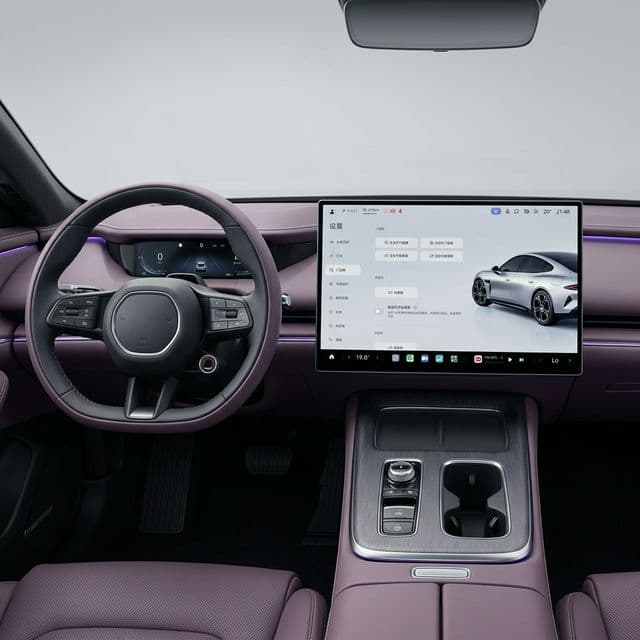
Product illustration only; it does not identify emergency keyways, hood releases, jump terminals, or the installed auxiliary battery.
The handover pack should explain which physical key or emergency tool is supplied, how to enter the cabin without electrical power, and how the approved support-power points are reached. Confirm those items during an authorized pre-shipment demonstration or documentation review. Do not assume that every smart fob contains a mechanical blade or that every car has the same hidden handle slot.
At destination, match the procedure to the VIN and current vehicle condition. Do not pry trim, peel back wheel-arch liners, or apply power to unfamiliar wires based on a similar model's instructions. If entry requires equipment or access the terminal cannot provide, stop and arrange the documented recovery alternative. Record the condition before intervention so later damage assessment has a reliable starting point.
6. Recovery SOP: authorize the correct procedure before applying power
This is an importer authorization sequence, not a universal charging recipe. It deliberately leaves voltage, current, duration, temperature limits, and connection order to the applicable OEM procedure. Neither a bench supply nor a lithium-labelled booster is automatically approved for the vehicle.
- Secure the work area. Have the terminal and receiving contractor agree who controls vehicle movement and access. If damage, unusual heat, leakage, smoke, or other signs of a battery incident are present, follow the site's emergency arrangements and obtain specialist assessment before electrical work.
- Identify and document. Record VIN, arrival condition, auxiliary system identity, approved measurement points, and initial observations. A trained technician should distinguish a low supply from a disconnected or damaged circuit.
- Approve the equipment and method. Match the external supply, polarity, connection points, and operating limits to the OEM instructions. A 12V auxiliary connection, a 48V connection, and an emergency latch-power connection may have different purposes. Do not improvise a battery-charge connection from the presence of accessible terminals.
- Perform only the permitted recovery. A qualified technician monitors the conditions required by the procedure and stops at its limits or any abnormal response. An unresponsive pack is not permission to bypass the BMS, defeat charger detection, repeatedly boost, or open the battery enclosure.
- Verify the vehicle state. Record faults, auxiliary supply stability, and any required checks before brake release or movement. A display that lights up does not prove drive readiness, a healthy auxiliary battery, or acceptable traction-system condition.
- Release or escalate. Document the work, equipment settings, results, and person authorizing movement. If the method fails or required service information is missing, hold the vehicle for OEM-directed service or use the approved transport plan.
Pyrofuse or crash-related lockout: require fault evidence
An ordinary discharged auxiliary battery and a crash-related isolation fault require different responses. A pyrotechnic disconnect is a one-time safety device where fitted; its location, operating logic, and replacement requirements are vehicle-specific. This guide has no evidence for a universal vessel-motion trigger, trip acceleration, diagnostic code, or replacement allowance per shipment.
If diagnostics indicate a crash-related or isolation fault, preserve the scan and event information and refer the vehicle for the specified assessment. Do not bridge a safety disconnect or assume a replacement fuse alone authorizes return to service. Confirm the root cause, exact part compatibility, required inspections, and restoration procedure before ordering parts or promising a departure time.
7. Electronic parking brake and locked-wheel handling
A vehicle that cannot release its electronic parking brake needs a movement plan approved for its condition. Towing restrictions may depend on drive layout, transmission state, steering availability, ground clearance, vehicle mass, and access. Do not assume it can be rolled or towed merely because external power has restored the cabin display.
Use the OEM's specified release or recovery method. Where wheels cannot rotate, a recovery contractor may need appropriately rated skates, dollies, or other equipment under that method. The terminal must approve the operation and available clearance. Avoid dragging locked wheels as an improvised unloading procedure.
There is no generic caliper motor removal, tool size, winding direction, or number of turns that can safely be specified across the models covered by this article. Mechanical brake work belongs in a controlled service process with the correct instructions, restraint, inspection, and restoration checks. A mechanically released brake is not evidence that the vehicle is roadworthy.
8. B2B shipment and reception checklist
Attach a VIN-linked record to the inspection brief. Set acceptance criteria, responsible parties, and escalation contacts before the vehicle leaves the export yard.
Before loading
- Record auxiliary voltage domain, chemistry, battery part number, and applicable OEM instructions.
- Obtain a dated battery-condition assessment using the prescribed method; resolve failed or unknown condition.
- Document the approved storage or transport mode, activation result, and destination exit procedure.
- Log sleep demand and relevant wake events with equipment and test conditions; compare with the full storage-and-transit interval.
- Obtain the carrier's written battery-condition, charging, disconnection, and stowage requirements for the shipment.
- Verify supplied keys and the documented emergency-entry route; send instructions to the receiver.
- Confirm support equipment, service access, locked-wheel handling, and destination contractor availability.
During handover and reception
- Preserve yard-release timestamps, shipping records, and any agreed battery-care interventions.
- Photograph arrival condition before entry or connection; log access restrictions and visible damage.
- Have the technician record initial measurements and diagnostic findings at approved points.
- Approve the OEM recovery procedure and equipment before work; record results and stop conditions.
- Complete required checks before movement and delivery, including restoration from transport mode.
- Record exceptions, quotations, responsible contacts, and the applicable contractual notice deadlines.
If documentation is incomplete, use the B2B sourcing and technical inquiry desk to define the missing inspection deliverables before booking the next lot. Request evidence against the actual VINs rather than a general assurance that the cars will arrive ready to drive.
9. Sourcing decisions, cost exposure, and contractual remedies
Compare offers on the delivered operating plan as well as vehicle price. Ask for destination recovery availability, compatible replacement-battery lead time, diagnostic access, and the party authorized to approve additional costs. Obtain local quotations for storage, handling, and transport; this guide supplies no verified global port tariffs or component repair prices.
For budgeting, list the intervention, expected time, contractor quotation, storage exposure, parts lead time, and responsible payer. Keep a contingency separate from an agreed service price. This lets procurement compare preventive inspection costs with destination uncertainty without treating an illustrative cost estimate as market data.
ICC's Incoterms® 2020 overview identifies the rules as a framework for allocating responsibilities, costs, and risks. It also distinguishes the default insurance levels under CIF and CIP. The selected rule, named place or port, full contract, and policy wording need to be read together; a destination named in a freight term does not by itself settle a battery-condition dispute or insurance claim.
Agree the following deliverables explicitly with the counterparty and relevant advisers:
- Condition at release: required battery assessment, transport-mode evidence, reserve-budget assumptions, and records for each VIN.
- Arrival response: authorized entry and recovery methods, spending limits, who arranges service, and how a vehicle is held pending a decision.
- Remedies and notices: evidence needed for an exception, notification deadlines, replacement-part approval, warranty boundaries, and any agreed payment conditions.
These are negotiation prompts, not automatic entitlements. No universal battery wake-up warranty, delivery deadline, retention percentage, or transfer of all liability follows from this checklist. Put the agreed obligations in the signed documents and retain the supporting inspection records.
10. Frequently asked questions
Does a zero-volt reading prove an LFP BMS cutoff?
No. A protective disconnect is one possibility, but the circuit may be disconnected, damaged, or measured at the wrong point. Confirm the system identity and follow the OEM diagnostic procedure. The reading alone does not justify a forced charger mode or direct battery charging.
Can a 12V recovery kit be used on a 48V-equipped EV?
Only where the OEM instructions explicitly identify a suitable 12V connection for the intended function. A vehicle may have more than one auxiliary voltage domain. Do not connect a kit to a 48V battery or assume an emergency latch connection is a charging point.
Why does the traction battery not always maintain the auxiliary supply?
Parked replenishment depends on the architecture, settings, state of charge, and fault state. Shipping mode may change available functions. Confirm the documented behavior and measurement conditions; do not rely on an assumed automatic top-up throughout the voyage.
Can a deeply discharged LFP auxiliary battery always be recovered?
No. Recovery depends on battery condition, the protective state, and the manufacturer's limits. This guide cannot establish safe cell-voltage or time thresholds for an unidentified pack. Use the approved assessment and replacement criteria instead of repeatedly attempting to wake it.
How should a dead vehicle with a clamped EPB be unloaded?
Use the VIN-specific release or towing instructions and a terminal-approved recovery contractor. If the permitted electrical release fails, arrange the specified locked-wheel transport method. Generic caliper disassembly instructions are not a substitute for an applicable service procedure.
Is a measured sleep current below 15 mA a universal pass?
No. Acceptance depends on supported usable reserve, the complete logistics interval, wake events, charging behavior, and the arrival margin. The worked example explains how to calculate a planning limit. It does not certify a current target for every Chinese EV.
Does a transport-mode confirmation prove arrival readiness?
No. It is one part of the record. Battery condition, storage demand, shipment duration, access arrangements, and successful destination restoration also matter. Require the relevant evidence and identify who authorizes final delivery.
11. Sources and evidence boundaries
Source catalogue and overview pages checked on 03 November 2026. These references support the diagnostic, maritime, and commercial context only. They do not verify any model's auxiliary battery specification or provide a recovery service manual.
- ISO 14229-1:2020 — Unified diagnostic services, application layer: historical catalogue reference for the diagnostic framework. The entry is marked withdrawn and points to a newer edition; confirm the applicable edition with the OEM. It does not define a universal transport-mode implementation.
- IMO — International Maritime Dangerous Goods Code overview: official maritime dangerous-goods context. Use the applicable detailed provisions and carrier acceptance requirements for the booked shipment, rather than treating this overview as electrical service instructions.
- ICC — Incoterms® 2020: official overview of trade responsibilities and insurance distinctions. The selected rule and signed contract govern the transaction; this page does not decide an individual insurance claim.
For physical intervention, the missing controlling evidence is the current OEM procedure applicable to the VIN and installed battery. Obtain it through the supplier or authorized service channel before work. The reserve arithmetic and document matrix above are editorial planning aids, not first-hand vehicle tests or customer case studies. Recheck the brief when the model year, battery part, software, carrier terms, or logistics interval changes.
Next steps: request a low-voltage staging and inspection brief
Send your model and model year, shipment quantity, destination port, and RoRo or container plan through the B2B sourcing and technical inquiry desk. Ask to confirm the available VIN-specific documentation, battery-condition checks, transport-mode evidence, destination recovery coverage, and any remaining exclusions before agreeing the inspection scope.
For related decisions, read the CTB underbody damage and inspection guide, compare the RoRo versus container shipping framework, or browse engineering support articles. These complement the low-voltage handover record when preparing a complete importer inspection brief.