
Cell-to-Body (CTB) & Structural EV Batteries: B2B Importer Guide to Underbody Inspection, Transit Damage, and Repair Boundaries
CTB battery underbody inspection for EV importers: compare transit damage evidence, OEM repair limits, and shipment release checks. Plan your inspection brief.
Published and reviewed: 25 October 2026. Scope: global B2B procurement of Chinese EVs.
CTB battery underbody inspection starts with identifying the damaged component, not choosing a universal dent-depth limit. For an importer, the useful question is whether the mark affects a replaceable shield, the sealed battery enclosure, a cooling connection, or a body attachment—and who can provide a documented release decision for that exact vehicle.
This guide helps procurement teams compare service support before ordering, preserve transit-damage evidence, and specify a pre-delivery inspection (PDI) handover. Its information increment is a component-based triage matrix and an evidence checklist that assign the next action to the exporter, carrier, inspector, or insurer.
Quick procurement decision: if the supplier cannot identify the battery variant, provide applicable damage-assessment instructions, or name a destination repair route, resolve those gaps before shipment release. A clean dashboard alone is insufficient evidence. Discuss a vehicle-specific inspection brief with China Hyper EV using the model, destination, and proposed shipping method.
Method and limits: this is an editorial procurement framework based on the public sources below, not an account of physical battery testing or measured shipment outcomes. CTB/CTC terminology, pack attachment, and repair access vary by OEM, model year, and battery revision. The matrix does not establish a safe dent depth or certify a vehicle. Model-specific procedures, destination rules, and the actual insurance policy determine acceptance.
1. Battery Architecture: Modular vs. CTP vs. CTB/CTC
Architecture labels help frame questions, but they do not establish whether a particular battery can be removed or repaired locally. Request the VIN-linked parts catalogue and workshop procedure before comparing repair exposure.
Traditional Modular Packs
Cells are grouped into modules within an enclosure. A separate shield may protect that enclosure, but its presence and available internal clearance must be checked for the actual vehicle. A modular pack is not automatically repairable at module level: access, replacement parts, sealing, and post-repair testing remain OEM-specific.
Cell-to-Pack (CTP)
CTP reduces or removes conventional module housings by integrating cells more directly into a pack. It describes pack construction; it does not, by itself, mean the pack replaces the passenger floor. Ask whether shields, cooling components, and the enclosure are supplied separately and what replacement requires.
Cell-to-Body (CTB) and Cell-to-Chassis (CTC)
These terms describe closer integration between the battery assembly and vehicle structure. Some designs combine the battery upper cover with a floor function; implementations differ. Structural integration does not universally mean a permanently bonded, non-removable battery, nor does it establish how much enclosure movement reaches a cell.
For procurement, obtain three answers: which part was struck, which procedure assesses it, and which workshop can execute that procedure in the destination market? Do not infer the architecture of an entire brand from one model's marketing material.
Structural Architecture Comparison: Modular Pack vs. Integrated Cell-to-Body (CTB)
Conceptual cross-sections only, not to scale. Layers, attachments, and clearances vary by model; neither drawing establishes damage tolerance.
2. Where Transit Damage Occurs: Handling Questions for the Forwarder
Use these scenarios to review a proposed route; they are not measured incident rates. For the wider transport choice, see our RoRo versus container decision framework.
A. RoRo Ramps and Breakover Clearance
Ask the operator to compare the actual ramp transitions with the loaded vehicle's approach, departure, and breakover clearance. A long wheelbase and a low central floor can make the ramp apex important even when the bumper clears. Record the agreed suspension setting and loading plan; do not assume a transport mode holds maximum ride height throughout a voyage.
B. Container Loading and Lashing
Specify the approved lifting and tie-down points, loading equipment, and clearance around the battery enclosure. Forklift tines, jacks, or lashing hardware must not be placed against an unidentified underbody surface. Ask for photographs after securing the vehicle so the position of chocks, straps, and supports can be checked.
C. Recovery and Flatbed Transfer
A non-running car requires the model's recovery instructions, including permitted towing arrangements and loading points. Agree the recovery method before dispatch rather than improvising at the port. A vehicle that was grounded during loading needs a recorded incident review, even if it still drives.
D. Storage and Repeated Handover
Document existing coating damage and exposure to water at each handover. A photograph cannot establish whether moisture entered a sealed pack. Keep the pre-shipment record, carrier exception report, and arrival photographs together so a new mark can be located in the chain of custody without inventing a corrosion timeline.
3. Underbody Inspection Matrix: Evidence and Repair Boundaries
There is no universal safe millimeter limit in this guide. A depth measurement describes the exterior surface; it does not reveal internal clearance, cell condition, or an approved repair. Record the location, shape, dimensions, and measurement method, then compare them with the applicable OEM instructions. Do not convert a type-approval test into a field dent-acceptance rule.
The eight rows below are editorial procurement triage recommendations, not OEM repair authorizations. An unidentified part is a reason to hold shipment release for review, rather than to classify a mark as cosmetic.
| Observed condition | Evidence to preserve | Immediate procurement action | Required decision owner | Release or repair boundary |
|---|---|---|---|---|
| Mark on a confirmed separate shield | VIN, part number, location and scale photographs | Confirm that the enclosure behind it was assessed | Inspector using OEM instructions | Shield replacement or acceptance only within the applicable procedure |
| Smooth dent on the sealed enclosure | Depth, shape, reference plane, instrument and photographs | Hold release pending model-specific assessment | Qualified EV workshop and OEM technical support | A shallow dent or normal dashboard does not establish acceptance |
| Sharp crease, crack, puncture, or exposed internal part | Incident report and photographs taken from a safe position | Stop routine loading and charging; invoke the site incident plan | Site safety lead and qualified EV responder | No improvised patching, straightening, or shipment release |
| Fluid near a battery cooling connection | Location, visible residue and prior service record | Hold release and request identification of the leak | Qualified EV workshop | Leak testing and repair parameters must come from the relevant procedure |
| Bent flange or displaced battery/body mount | Mount location, fastener condition and alignment record | Request attachment and body assessment | OEM-directed body and EV workshop | Do not infer alignment compliance from dent depth |
| Impact near an HV connector or junction enclosure | Impact location and available diagnostic report | Restrict handling pending qualified assessment | Qualified high-voltage technician | No probing live terminals or testing pyrofuse firing circuits as an importer check |
| Warning message, isolation fault, or unexpected no-ready condition | Exact OEM fault code, status, timestamp and scan conditions | Preserve logs before any authorized clearing | OEM-compatible diagnostic provider | A reset or a successful restart does not prove repair |
| Coating damage, corrosion, or suspected water exposure | Baseline versus arrival images and exposure history | Request enclosure/sealing review and claim notification | Qualified workshop, exporter and insurer | Cosmetic coating treatment cannot substitute for a required integrity assessment |
For suspected battery damage, use the site's emergency arrangements and the vehicle's response instructions. NHTSA's EV safety guidance advises treating damaged high-voltage components as energized and using appropriately trained technicians; it also identifies possible delayed fire and gas hazards. This is US safety guidance, not a global vehicle-approval rule.
4. Insurance Exposure: Repairability Evidence Before a Claim
Thatcham Research's July 2023 findings identify battery cost, limited post-accident diagnostics, and repair access as factors in premature write-offs. That UK report establishes a repairability concern; it does not require every underbody scrape worldwide to become a total loss.
Before buying, ask the destination insurer or broker whether the exact imported variant is insurable and which assessor or workshop it accepts. Request an answer covering:
- Battery damage assessment and any required observation or storage arrangements.
- Access to repair instructions, compatible diagnostic software, and replacement parts.
- Recovery, diagnostic, storage, and onward transport costs as well as physical repair.
- Claim notification deadlines, excesses, exclusions, and evidence requirements.
An economic total loss depends on the policy, repair estimate, vehicle value, and local rules. A safe storage decision, a repairability decision, and registration approval are separate decisions. Do not assign UK salvage categories to vehicles in other markets or promise that an inspection certificate will prevent a write-off.
5. BMS Diagnostics: Useful Evidence, Limited Conclusions
A diagnostic scan complements the physical inspection; it does not replace it. Record the tool and software version, vehicle and battery identifiers, state of charge, temperature, fault status, and the technician's interpretation. A report should distinguish data that the tool can read from parameters it cannot access.
Isolation Resistance and Cell Balance
There is no single importer acceptance value for all pack voltages, circuit arrangements, and test conditions. Ask the qualified technician to cite the applicable OEM procedure and limits for isolation monitoring, cell-voltage spread, and any cooling-system assessment. Do not apply a generic resistance or millivolt figure from another model.
Normal BMS readings do not, by themselves, prove the absence of internal impact damage. Equally, a fault or cell imbalance is not a unique diagnosis of mechanical compression. The assessor must evaluate the physical evidence and the diagnostic conditions together.
Fault Records and High-Voltage Work
Preserve the exact OEM code and its documented meaning rather than translating it into an invented cross-brand code. Capture current and stored status before any authorized clearing. Live electrical testing, pack opening, interlock checks, and work on pyrotechnic disconnects belong to trained personnel following the vehicle procedure, not to a procurement checklist.
If a supplier sends only a dashboard photograph, request a documented inspection scope specifying who will assess the vehicle, what the tool can read, and what evidence will accompany shipment release.
6. Product Illustration: Side Profile Is Not an Underbody Inspection

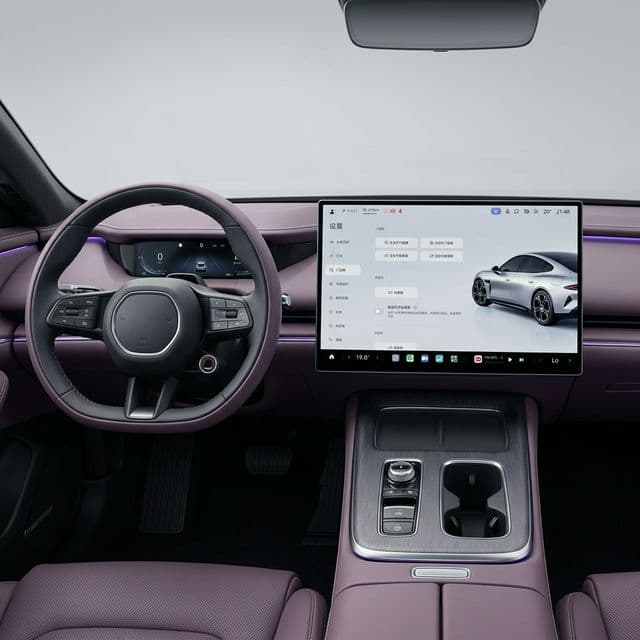
Figure 1: Existing Avatr 12 product illustration. It helps explain why vehicle geometry matters to a loading plan, but shows neither the underside nor a verified ground-clearance measurement. Obtain model-specific dimensions and actual vehicle photographs rather than treating a marketing image as inspection evidence.
7. B2B Pre-Shipment and Port Reception Checklist
Use the same record at dispatch and arrival. Assign the inspection owner and agree the shipment-release, payment, and discrepancy process in the purchase contract before loading. A carrier receipt or bill of lading does not replace this technical record.
- 1. Identify the vehicle and pack: record VIN, model year, battery variant or part number, software version where available, and odometer. Match the applicable repair and recovery document revisions to that configuration.
- 2. Capture a physical baseline: use an approved lift or inspection pit and OEM support points. Photograph the shield, enclosure, perimeter, mounts, connections, and any existing marks with location labels and a scale.
- 3. Record damage measurements: distinguish a mark from a dent, identify the actual part, and note instrument, reference surface, and uncertainty. Compare against the model-specific procedure; missing limits require escalation rather than an invented pass.
- 4. Preserve diagnostic evidence: have a qualified provider export available fault records and relevant battery data with test conditions. State unavailable parameters explicitly; do not clear faults just to obtain a clean report.
- 5. Review fluids, sealing, and attachments: document visible residue, damaged connectors, coating breaks, loose or displaced mounts, and suspected water exposure. Refer findings to the appropriate workshop instead of opening the pack at the yard.
- 6. Confirm the handling plan: obtain approved lifting, tie-down, recovery, suspension, and transport-mode instructions. Verify ramp and equipment suitability for the actual vehicle configuration. Fit additional guards only if the OEM and carrier permit them.
- 7. Confirm the destination support route: record the named workshop, diagnostic access, parts-compatibility confirmation, written quotation assumptions, insurer acceptance, and any local approval requirement before making a release decision.
- 8. Close the arrival handover: compare dispatch and arrival records, preserve any carrier exceptions, and notify the contract parties and insurer within their stated deadlines. Record assessor name, open findings, release decision, and supporting document identifiers.
For every exception, retain a compact evidence packet: VIN → dated location photograph → measurement or scan → procedure reference → responsible assessor → written disposition. Missing evidence is a procurement hold, not automatic proof that the battery is damaged or safe.
8. Contract and Sourcing Decisions Before Purchase
Separate Delivery Risk, Insurance, and Inspection Acceptance
Name the delivery rule, its edition, and the agreed place or port in the sales contract. Have the parties confirm the actual delivery and risk-transfer event, inspection obligations, and claim process. A seller paying for freight or insurance is not, on its own, a promise to retain every risk until destination acceptance.
ICC's Incoterms® 2020 explanation distinguishes the default insurance levels: CIF retains Institute Cargo Clauses (C), while CIP requires Clauses (A) or similar cover. These levels are not interchangeable. Ask the broker to confirm battery-impact cover, handling legs, exclusions, deductibles, and survey requirements in the actual policy rather than assuming that either term covers every battery failure.
Specify the Repair Route and Commercial Remedy
Before selecting a model, request a VIN-compatible pack or component quotation, diagnostic and commissioning requirements, destination workshop capability, freight arrangements, and expected lead time. Compare the complete landed repair cost, including assessment, storage, recovery, labor, and any required approvals. A generic battery price is insufficient for selecting a supportable vehicle.
If commercially agreed, use a defined arrival-inspection window and retention or escrow arrangement. State the evidence required, who decides disputed findings, and when payment becomes due. Percentages and deadlines are negotiated terms, not universal industry requirements; align any documentary credit conditions before issuance.
9. Frequently Asked Questions
Can I accept a 2 mm dent on a CTB battery enclosure?
No universal 2 mm acceptance rule is established here. Identify the part, location, shape, and pack revision, preserve measurements, and obtain a decision under the applicable OEM procedure. A shallow mark on a separate shield and a crease on the sealed enclosure are different findings.
Does CTB mean the battery cannot be removed?
No. Integration terminology does not establish pack removal or repair access across all manufacturers. Obtain the relevant workshop procedure, required supports and lifting equipment, and the destination provider's written capability confirmation for the exact vehicle.
Does a clean BMS scan prove that an underbody strike caused no damage?
No. A scan reports what the accessible sensors and software detect under recorded conditions. It cannot establish every internal mechanical condition. Combine it with the physical assessment and the model-specific decision process; do not use repeated charging as a damage-clearance test.
Can a body shop pull or weld a dent in the battery enclosure?
Do not authorize improvised straightening, heating, welding, pack opening, or electrical probing. Ask a qualified EV repairer for the applicable OEM procedure and written repair scope. Any permitted enclosure repair, component replacement, or pack replacement must follow that procedure and its verification requirements.
Will a scrape automatically void the warranty or cause a total loss?
There is no universal answer. Warranty territory, exclusions, cause of damage, and the manufacturer's assessment matter; insurance depends on the policy and repair economics. Request the exact written warranty and coverage terms before importing. A generic depth threshold does not decide either question.
What should I budget for a replacement pack and extra transit protection?
Obtain written quotations against the VIN and pack part number, including installation, commissioning, freight, and destination support. There is no verified cross-model price or lead time in this guide. Additional guards also need model and carrier approval; they can alter clearance and do not guarantee damage-free transport.
Does an underbody inspection guarantee local registration approval?
No. Destination approval depends on the applicable local process and vehicle configuration. Ask the local technical service what evidence it requires for this vehicle and any repaired components. An export PDI record supports that conversation but is not a substitute for approval.
10. Sources, Dates, and Evidence Boundaries
Sources reviewed on 25 October 2026. The decision matrix and checklist are editorial synthesis; these sources do not establish model-specific dent limits, service quotations, warranty decisions, or China Hyper EV testing capability. Recheck the guide when the battery variant, OEM procedure, carrier conditions, or destination requirements change.
- NHTSA: Electric and Hybrid Vehicles — US regulator guidance on qualified high-voltage servicing, damaged-vehicle hazards, and following manufacturer instructions. Used for the safety and service boundary, not global homologation acceptance.
- Thatcham Research: BEV repair and insurance findings, 5 July 2023 — UK research identifying battery assessment, repair access, and cost challenges. Historical context rather than a current global write-off mandate or a Chinese-model cost estimate.
- ICC: Incoterms® 2020 — the rules publisher's explanation of delivery responsibilities and differing CIF/CIP insurance obligations. Used for the insurance distinction, not a determination of an individual claim.
Next Steps: Request a Vehicle-Specific Inspection Brief
Send China Hyper EV the model or VIN if available, destination port, quantity, and shipping method through our B2B sourcing inquiry page. Ask which inspection records, OEM documents, destination support, and third-party assessments can be arranged for that shipment; confirm the scope and quotation in writing before booking.
Continue with the RoRo versus container shipping framework, or browse engineering support guidance and sourcing and procurement guides to prepare the purchasing brief.