The 'Brick' Risk: How eSIM Region Locks and ADAS Geo-Fencing Impact Chinese Premium EV Imports
A procurement guide for B2B importers on navigating telematics, OTA update failures, and ADAS geofencing when parallel exporting Chinese Hyper EVs.
The "Brick" Risk: Navigating eSIM Region Locks and ADAS Geo-Fencing in Exported Chinese EVs
As the export market for high-end Chinese electric vehicles—such as the Xiaomi SU7, Zeekr 001 FR, and Yangwang U9—accelerates, B2B importers are encountering a severe engineering hurdle. These vehicles are no longer just mechanical transport; they are "computers on wheels" built around continuous connectivity, localized cloud ecosystems, and high-definition geographic data.
When these premium EVs are parallel exported outside of mainland China, importers frequently discover that the vehicle's smartest features become effectively "bricked." Understanding the technical boundaries of Over-The-Air (OTA) updates, embedded SIM (eSIM) region locks, and Advanced Driver-Assistance Systems (ADAS) geo-fencing is critical to preventing disastrous procurement mistakes.
Scope and evidence basis, reviewed June 24, 2026: this guide applies to domestic-spec vehicles sourced through parallel export channels, not official export trims with localized T-Boxes, telecom profiles, type approval, and warranty coverage. It is written for procurement managers, fleet engineers, and regional distributors who need a pre-purchase engineering screen. Treat the recommendations as a technical due-diligence workflow; final commitments still require VIN-level testing, local compliance review, and written support terms from the seller or OEM-authorized service channel.
For adjacent hardware risks, pair this software review with our 800V GB/T-to-CCS2 charging conversion guide, pre-owned performance EV battery health checklist, and premium EV fleet procurement playbook.
The Core Problem: The Telematics Box (T-Box) and eSIM Locks
Modern Chinese EVs rely on a Telematics Box (T-Box) to communicate with the manufacturer's cloud infrastructure. The T-Box houses an eSIM—a chip soldered directly onto the motherboard—provisioned by domestic Chinese telecom operators (e.g., China Mobile, China Unicom).
The procurement implication is simple: eSIM hardware is not just a removable data plan. Embedded SIMs are managed through remote provisioning and lifecycle controls for machine-to-machine connections, including connected vehicles. If the OEM account, subscription manager, cloud endpoint, or roaming policy is not enabled for the destination market, a physical vehicle can arrive with no usable cellular backend.
Why Connectivity Fails Upon Export
- Network Roaming Restrictions: Domestic Chinese eSIMs are often heavily restricted from international data roaming to control costs and comply with data export regulations. Once the vehicle arrives in Dubai, London, or Sydney, the car drops offline.
- Data Sovereignty Protocols: Due to strict cross-border data transfer laws, manufacturers actively block foreign IP addresses from accessing their domestic cloud servers.
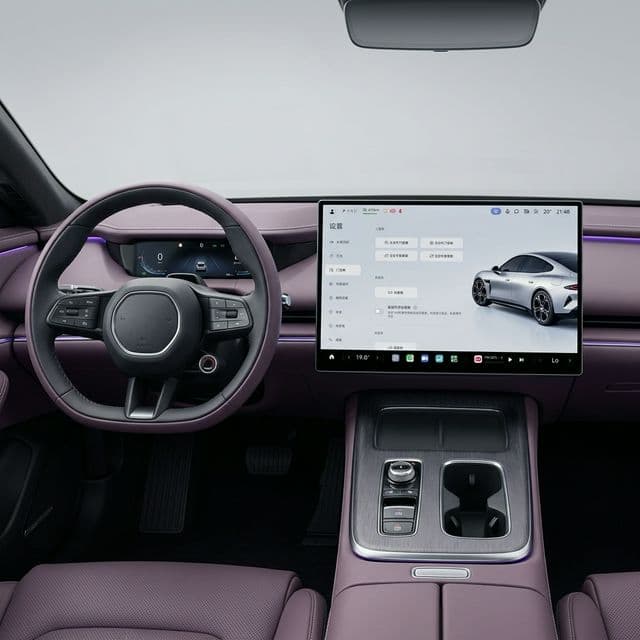
- Hardcoded Ecosystems: The infotainment systems (often built on customized Android or HarmonyOS) lack Google Mobile Services (GMS). Apps like Baidu Maps and QQ Music become useless outside of China.
Without cellular data, the vehicle loses navigation, real-time voice assistance, remote app control (like pre-conditioning the cabin), and most importantly, critical OTA software updates.
China's automobile data-security rules also explain why this is not always a simple "turn roaming on" request. The CAC rules define sensitive automobile data categories and require important data to be stored domestically unless a cross-border transfer path passes the required assessment. For a domestic-spec car, the OEM may have no compliant foreign data-flow path for navigation, ADAS logs, camera-derived data, user app telemetry, or OTA diagnostics.
Export Connectivity Architecture (T-Box Limitation)
Fig 1: Why exported EV telematics fail at the data and IP routing boundary.
The ADAS Geo-Fencing Problem
Chinese automakers lead the world in L2+ Advanced Driver-Assistance Systems (ADAS), such as Navigate on Autopilot (NOA). However, these systems rely extensively on local high-definition (HD) map data and highly trained localized AI models.
When a vehicle leaves China, the GPS coordinates fall outside the validated geofenced zones.
This is an operating-domain issue, not merely a map-download issue. NHTSA defines an automated-driving operational design domain as the conditions under which a feature is designed to function, including geographic restrictions and traffic or roadway characteristics. For Chinese-market NOA, the validated domain is often tied to domestic HD maps, local traffic rules, Chinese-language HMI prompts, and local cloud validation.
What Works vs. What Breaks
| Feature Category | Pre-Export Functionality | Post-Export Reality (Without OEM Support) | B2B Importer Action Required |
|---|---|---|---|
| Basic ADAS | Adaptive Cruise Control (ACC), Lane Keeping | Usually Functional. Relies on local radar/cameras, not cloud mapping. | Verify ADAS camera calibration after shipping. |
| Advanced ADAS (NOA) | City/Highway Navigate on Autopilot | Bricked. HD maps do not cover foreign regions; geofencing disables the UI. | Reset buyer expectations; market the vehicle without NOA. |
| Infotainment & Nav | Baidu Maps, QQ Music, iQiyi | Bricked. Apps fail due to lack of network and geoblocking. | Install secondary CarPlay/Android Auto dongles. |
| Companion App | Remote start, AC control, digital key | Severely Degraded. May work if the user connects the car to local Wi-Fi, but cellular sync fails. | Provide physical key fobs; do not promise digital key reliability. |
| Voice Assistant | High-speed natural language AI | Bricked or Degraded. Fails without cloud connectivity; localized only in Mandarin. | Ignore feature; wait for official export hardware variants. |
| OTA Updates | Seamless background firmware upgrades | Blocked. T-Box cannot reach domestic servers; IP is blocked. | Must establish a workshop with factory diagnostic tools to flash firmware via OBD/USB. |
90-Minute Pre-Shipment Software Validation Matrix
Do not rely on seller videos recorded inside China. Run this validation on the target VIN after the vehicle is prepared for export and before the final balance payment.
| Test | How to Run It | Pass Condition | Procurement Decision |
|---|---|---|---|
| T-Box carrier profile | Read the T-Box hardware label and diagnostic screen, then confirm SIM form factor and carrier profile. | Physical SIM or documented eSIM remote-provisioning path for the target country. | If locked MFF2 eSIM with no support letter, price the car as offline. |
| Foreign IP cloud login | Connect the vehicle through a non-China network or destination-country VPN exit and open the OEM account. | App login, vehicle binding, and status sync work for 30 minutes. | If binding fails, exclude remote app promises from the sales contract. |
| OTA reachability | Check firmware version, trigger an update check, and record the server response. | Vehicle returns a normal "no update" or update package response without region error. | If unreachable, require wired flashing tools before fleet delivery. |
| Navigation fallback | Search a destination in the target country and start turn-by-turn guidance. | Local address search, route calculation, and voice guidance work without China-only POI data. | If native navigation fails, include CarPlay/Android Auto hardware in the bill of materials. |
| ADAS activation outside China | In a safe test area, attempt ACC/LKA and then NOA/City Pilot activation where legally allowed. | Basic ACC/LKA works; NOA availability is documented honestly. | If NOA is geofenced, remove it from retail spec sheets. |
| Language persistence | Set the UI to English or the target language, power-cycle the vehicle, and disconnect 12V for a reset test. | Instrument cluster, center screen, warnings, and voice prompts stay usable. | If Mandarin returns after reset, flag the VIN for high support cost. |
Engineering Workarounds: Can You Swap the eSIM?
For parallel importers, the most pressing question is: "Can we just open the dashboard and swap the SIM card?"
The answer is rarely simple. In older or budget EVs, a physical nano-SIM slot may exist in the T-Box, making a swap theoretically possible (though IP routing issues may persist). However, in premium 800V architectures, the eSIM is an MFF2 surface-mount chip soldered directly to the PCB.
Bypassing this requires a specialized hardware retrofit: desoldering the eSIM, soldering a SIM card reader pigtail, and inserting a local IoT data SIM. Even if successful, the vehicle's firmware may reject the new ICCID (SIM serial number) due to cryptographic pairing with the BMS (Battery Management System).
B2B Procurement & Engineering Validation Checklist
Before committing to a multi-million dollar fleet procurement, ensure you have validated the software boundary of the target vehicle.
- 1. Connectivity Hardware Audit: Identify if the vehicle uses a physical SIM slot or a soldered MFF2 eSIM in its Telematics Box.
- 2. Diagnostic Tool Access: Secure an OEM-level engineering diagnostic laptop to enable manual, wired firmware flashing when OTA is unavailable.
- 3. English UI Verification: Confirm that the primary instrument cluster and central screen can be hardcoded to English (or the target language) natively, without reverting to Mandarin upon system reboot.
- 4. Infotainment Workaround: Test third-party hardware modules (e.g., Carlinkit, USB Android Auto boxes) to bypass the dead native navigation system.
- 5. Manage Client Expectations: Explicitly draft B2B purchase agreements that exclude warranty claims for geofenced ADAS features (NOA/City Pilot) and OTA functionality.
- 6. Policy and Market Readiness: Review the destination country's import rules with the China EV export policy guide and run a pre-shipment quality-control inspection before release.
Frequently Asked Questions (FAQ)
Q: Will the vehicle's basic driving functions stop working if the eSIM is disconnected? A: No. The core drivetrain, battery management, and basic safety systems (ABS, ESP) operate on closed CAN bus loops. The vehicle will drive perfectly fine offline; only cloud-dependent features fail.
Q: Can we use a VPN router in the car to bypass the IP blocks? A: While a mobile Wi-Fi hotspot with a Chinese VPN can trick the T-Box into seeing a domestic IP address, the latency is often too high for OTA updates, and this does not solve the lack of international HD maps for ADAS.
Q: Do official export models have these issues? A: No. When OEMs officially export vehicles (e.g., BYD Seal in Europe, Zeekr in the Middle East), they install localized T-Boxes compliant with GDPR/local data laws, partner with local telecoms (like Vodafone), and integrate Google maps. These issues specifically plague parallel imports (grey market) of domestic-spec vehicles.
Actionable Next Steps
Sourcing premium EVs from China offers incredible hardware value, but the software ecosystem introduces severe friction. Do not let "bricked" infotainment or disabled ADAS derail your distribution network or fleet operations.
If you are struggling with telematics integration, require hardware diagnostic access, or need a strategic roadmap for adapting domestic-spec Chinese EVs to your local market, our engineering team can help.
Contact our technical support desk or email [email protected] to discuss T-Box retrofits and diagnostic procurement.
Sources and Technical References
- CAC automobile data security provisions for automotive data processing, domestic storage, and cross-border transfer constraints.
- NHTSA Standing General Order 2021-01 for operational design domain language covering geographic and roadway restrictions.
- UK Vehicle Certification Agency guidance on cybersecurity and software updating for UN R156 software-update management context.