
Chinese EV Heat Pump Thermal Management: Importer Guide to Refrigerant Compliance, Gulf Hot-Climate Derating, and High-Voltage Servicing
Chinese EV heat pump thermal management: check refrigerant rules, Gulf cooling evidence and workshop readiness. Request a model-specific sourcing brief today.
Published and reviewed: 1 November 2026. Audience: global B2B importers, procurement teams, homologation engineers and destination service networks.
For Chinese EV heat pump thermal management, verify three boundaries before signing a purchase contract: the VIN-specific refrigerant and destination approval route, cooling performance under the intended climate and charging conditions, and the receiving workshop's approved fluids, tools and service access. A “wide-temperature heat pump” claim alone does not establish any of these. Heat-pump heating efficiency also does not prove adequate summer cooling capacity.
This guide provides an importer evidence matrix, a pre-shipment checklist and a workshop handover framework. Send China Hyper EV your model, quantity and destination to request a sourcing brief and agree which supporting documents and inspection services are available before placing an order.
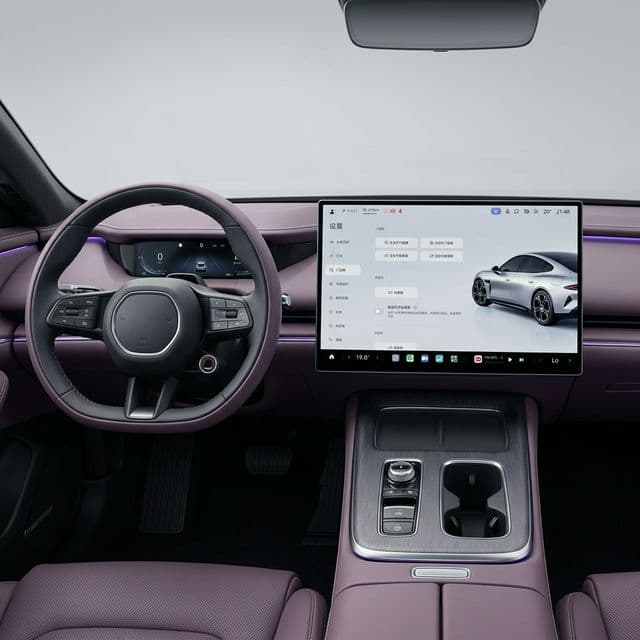
Scope and limits: This is an editorial procurement and engineering decision framework, not a vehicle manufacturer workshop manual or a physical dynamometer test report. It addresses Chinese BEVs and EREVs with integrated thermal systems; EREVs also require engine-cooling documentation. Model year, destination regional homologation package, build date and firmware version can change the circuit, fluids and diagnostic procedures. No model-specific refrigerant, chiller rating, hot-weather validation or service threshold is verified here. The cover image illustrates a performance vehicle; the schematic below explains functional relationships rather than a production vehicle's pipe routing.
1. Integrated Thermal Architectures: Direct Refrigerant vs Secondary Coolant Loops
An integrated thermal system can transfer heat among the passenger cabin, battery and drive units. Integration may involve shared refrigerant circuits, liquid coolant circuits, valves and software controls. It does not mean all components share one fluid or one controller.
Direct refrigerant cooling (refrigerant-to-pack)
In a direct-refrigerant arrangement, refrigerant exchanges heat at a battery cooling surface without an intermediate glycol circuit at that interface. This can remove one heat-exchanger stage, but any efficiency benefit depends on design and operating conditions. It is not a universal temperature or weight saving.
Procurement consequence: Ask for the actual battery cooling diagram and the OEM's refrigerant recovery boundary for pack removal or collision repair. A model name or battery brand alone does not establish whether a refrigerant connection must be opened during a specific repair.
Indirect liquid chilling (refrigerant-to-coolant)
In an indirect arrangement, a chiller transfers battery heat from a secondary coolant loop into the refrigeration circuit. Battery, motor and inverter loops may have different fluids and may be connected or isolated in different operating modes.
Procurement consequence: Budget separately for refrigerant service equipment and the coolant filling/bleeding equipment specified for the VIN. Neither architecture guarantees better Gulf performance: compare documented cooling results at the required ambient temperature and load.
Conceptual EV thermal management boundaries
Indirect-cooling example. Lines show functional heat-transfer relationships, not flow direction or service connections. Direct-refrigerant pack designs differ.
2. European Refrigerant Compliance: MAC Rules and F-Gas Documentation
Directive 2006/40/EC (MAC Directive)
The EU MAC Directive, Articles 2 and 5, covers M1 vehicles and N1 class I vehicles. From 1 January 2017, Article 5(5) requires Member States to refuse registration, sale and entry into service of new vehicles in scope with air-conditioning systems designed for fluorinated gases whose GWP exceeds 150.
R134a exceeds that threshold. R1234yf and R744 are low-GWP alternatives, but a refrigerant choice alone does not establish whole-vehicle approval. Obtain evidence for the actual vehicle and approval route. Used-vehicle imports and individual approvals require destination-specific review; this guide does not promise an exception or an approved conversion path. Confirm UK and EEA requirements separately rather than applying EU rules to all destinations automatically.
Do not infer factory refrigerant from “China domestic” or “export” labels. Obtain a legible refrigerant label linked to the VIN, charge specification and manufacturer documentation. This guide does not establish a Chinese domestic phase-out date or claim that every domestic vehicle uses R134a.
Regulation (EU) 2024/573: distinguish HFC quotas from other obligations
The EU F-Gas Regulation governs different substances and activities through different provisions. HFC quota accounting and other fluorinated-gas obligations should not be treated as identical. In particular, do not assume R1234yf carries the same quota treatment as R134a merely because both are fluorinated refrigerants.
Before shipment, have the EU importer and customs adviser map the actual substance, charge quantity and product category to the applicable provisions, including Article 19 where relevant. Record the required registration, declarations, quota authorisations and reporting obligations, or the documented reason a particular obligation does not apply. A supplier's generic “F-Gas compliant” statement is insufficient. Use the applicable consolidated text and current customs guidance when completing the declaration.
3. Gulf Hot-Climate Derating: Test Conditions Before Peak Claims
A proposed 50°C ambient test is a procurement scenario, not a verified GSO acceptance requirement or a rating for any vehicle in this guide. Agree realistic conditions with the supplier and destination engineer. Local homologation requirements and operational cooling acceptance are separate evidence requests.
Battery charging produces heat, and a shared refrigeration system may need to cool both the battery and a heat-soaked cabin. At high ambient temperature, rejecting that heat becomes more difficult, especially when stationary. Battery protection may reduce charging power, but the temperature threshold, control priority and resulting power depend on the vehicle and software.
A transparent heat-load illustration
P_loss = I² × R
For an assumed effective pack resistance of 0.05 Ω and current of 400 A, the simplified resistive loss is 400² × 0.05 = 8,000 W, or 8 kW. These are illustrative inputs, not a measurement or a specification for a Chinese EV. Pack resistance varies with temperature, state of charge and ageing; this calculation excludes other heat sources and cannot size a chiller or predict charging time.
What a useful hot-weather report contains
Request ambient temperature measured near the vehicle, humidity, solar exposure or chamber conditions, heat-soak duration, initial battery temperature and state of charge, cabin settings, charger output and firmware version. Log charging power, delivered energy, battery temperatures, cabin cooling and any thermal faults throughout the agreed charging window.
Compare the sustained charging curve and cabin result under those recorded conditions. A peak charging number or one cold vent reading cannot establish fleet turnaround time. A test at lower ambient temperature does not validate 50°C operation. Where a report is unavailable, require a witnessed sample test before volume commitment or treat Gulf performance as unresolved.
A “hot-climate package” should be supported by part numbers, calibration identification and matching results. Compressor displacement, fan count and condenser size alone are not acceptance criteria. For charging interface compatibility, use the separate 800V GB/T-to-CCS2 conversion guide; thermal acceptance remains a separate decision.
4. Importer Evidence Matrix: Turn Unknown Specifications into Contract Gates
The following matrix replaces unsupported model rankings with eight verifiable buying decisions. Apply it per VIN/build specification; none of the rows certifies a particular model. “Hold” means resolve the evidence gap before accepting the affected requirement.
| Procurement question | Evidence to request | Acceptance decision | Hold point |
|---|---|---|---|
| Which refrigerant is installed? | VIN-linked label photo, refrigerant identity and charge mass | Matches manufacturer documents and destination rules | Missing or conflicting labels |
| Can the vehicle use the intended approval route? | Applicable approval documents reviewed by the destination specialist | Route confirmed for this vehicle category and condition | Refrigerant choice offered as sole proof |
| Is F-Gas documentation needed? | Importer's substance/product classification and obligation assessment | Required registrations and declarations identified | Generic quota claim with no applicability analysis |
| Does cooling meet the fleet duty cycle? | Conditioned hot-weather charging and cabin report | Meets the buyer's agreed sustained-performance targets | Unconditioned peak figures or unrelated trim test |
| What is the battery cooling architecture? | OEM circuit diagram and pack-removal procedure | Workshop can support the actual refrigerant/coolant boundaries | Architecture inferred from marketing names |
| Which compressor lubricant is approved? | Compressor part number, oil specification and fill quantity | Exact approved product can be supplied and handled correctly | “Universal EV oil” substitution |
| Which coolant and bleeding process apply? | Fluid part number, OEM limits and service procedure | Fluid and required equipment available locally | Colour or a generic conductivity value used as proof |
| Can the receiving network perform service? | Demonstrated tool coverage for the model/software and access terms | Required diagnostic functions and trained personnel available | Connector compatibility offered as proof of service access |
5. High-Voltage Compressor Lubricants: Verify the Exact Approval
Electric compressors can require insulating lubricant because the motor operates in contact with the refrigerant/oil mixture. Using an unapproved oil or contaminated equipment can compromise insulation and damage the system. The appropriate oil is determined by the compressor and vehicle manufacturer, not by an “EV” label or voltage alone.
DENSO's compressor-oil guidance identifies ND-oil 11 as a POE product for its electric scroll compressors and ND-oil 8/12 as PAG formulations. These names are not interchangeable. This is a supplier-specific example, not evidence that any particular Chinese EV uses a DENSO compressor or accepts ND-oil 11. Do not generalise that every PAG formulation is electrically unsuitable or every POE/PVE product is approved.
Require the exact oil part number, viscosity specification where provided, quantity and equipment contamination-control procedure. Dedicated equipment or a manufacturer-approved segregation process must match both refrigerant and oil requirements. POE products also need appropriate moisture control; sealed storage and manufacturer handling instructions matter.
If contamination or an isolation fault is suspected, stop service and follow the OEM diagnostic and high-voltage isolation procedure with qualified personnel. The fault response, repair scope and return-to-service checks vary. This guide does not establish a universal contamination percentage, insulation-test voltage, diagnostic code, pyrofuse response or mandatory replacement of the entire thermal circuit.
6. Coolant Specifications and Diagnostic Bleeding Access
Some EV cooling circuits specify low-conductivity fluid; others specify different formulations. A universal limit such as “below 100 µS/cm” is not a valid acceptance rule for every Chinese EV. Fluid colour, “OAT” branding and a general antifreeze standard do not prove compatibility with the installed circuit.
Request the OEM fluid part number, mixture/concentration requirements, approved water quality if dilution is allowed, replacement interval and applicable test limits with their measurement conditions. If conductivity testing is specified, record fluid temperature and the calibrated measurement method. A reading alone cannot establish corrosion protection or approval. Do not mix fluids or top up using an unapproved substitute.
A coolant leak inside a battery enclosure can create an electrical hazard; the severity and protective response depend on location, fluid and system design. It does not inevitably cause immediate thermal runaway. Leakage or an isolation warning requires the OEM inspection and safe-work procedure rather than a speculative diagnosis.
Filling and bleeding capability
Multi-port valves and multiple loops may require vacuum filling, diagnostic valve/pump actuation or a prescribed combination. Obtain the VIN-specific procedure and demonstrate that the receiving workshop can perform it. Routine identifiers, vacuum targets, pump speeds and completion checks are manufacturer-specific; do not copy them from another model.
A tool having an OBD connector or supporting DoIP, CAN-FD or UDS does not prove access to the required bleeding function. Verify model/software coverage, credentials, subscriptions and any regional restrictions. For parts and service-document handover, see the three-electric spare-parts procurement guide.
7. Destination Workshop Tooling and Consumables Matrix
Use this seven-row readiness check with the manufacturer procedure. It defines evidence to collect, not a universal repair specification or permission to retrofit a refrigerant system.
| Service task | Tool or consumable to confirm | Evidence of suitability | Hold point |
|---|---|---|---|
| Refrigerant recovery and recharge | Equipment approved for the installed refrigerant and lubricant | Equipment documentation, segregation method and trained operator | Cross-contamination control not demonstrated |
| Lubricant handling | Exact OEM-approved oil and metering equipment | Part number, storage condition and specified quantity | Oil selected solely by refrigerant type |
| Coolant refill | OEM-approved fluid and required filling equipment | Correct circuit specification and filling procedure | Generic antifreeze or colour matching |
| Valve/pump bleeding | Diagnostic platform with the required service function | Demonstration on the model/software and completion record | Protocol support without function access |
| Refrigerant identity check | Appropriate identifier where required by procedure | Instrument range, calibration and interpretation instructions | Unknown or mixed refrigerant |
| Electrical isolation diagnosis | OEM-prescribed test equipment and qualified HV technician | Safe isolation, test points and approved test settings | Applying a generic megohmmeter voltage to connected electronics |
| Return-to-service verification | Diagnostic logs and required functional/leak checks | Recorded results against OEM criteria | Clearing faults without resolving their cause |
8. Pre-Procurement and Arrival Thermal Inspection Checklist
Use this 10-point checklist as a handover record. Assign a named owner, due date and evidence attachment to each item; unresolved safety or approval items should block acceptance.
- Identify the vehicle: Record VIN, model year, build specification, destination, mileage/new-or-used status and software version.
- Capture the refrigerant label: Record refrigerant and charge mass exactly as specified; resolve conflicts with build documents before service.
- Confirm the approval route: Have the destination specialist review the MAC scope and other applicable vehicle requirements; retain the written conclusion.
- Assess F-Gas obligations: Record the importer's classification and required registration/declaration/quota evidence, including a reason where a duty does not apply.
- Agree hot-weather acceptance: Specify climate, duty cycle, charging window, cabin settings and measurable buyer targets before testing.
- Obtain matching performance evidence: Link the report to the same hardware/software configuration; require a sample test if no suitable report exists.
- Record a diagnostic baseline: Retain relevant thermal and isolation fault logs; diagnose active faults rather than merely clearing them.
- Inspect for transport damage and leaks: Check accessible condenser fins, lines, hoses and reservoir levels using OEM instructions; refer damage for qualified assessment.
- Confirm fluids and local service readiness: Match oil/coolant part numbers, equipment contamination controls, required tools and diagnostic access.
- Complete arrival acceptance: Repeat the agreed functional checks, record conditions and results, and close exceptions before releasing the vehicle to the fleet.
For an RFQ, request a model- and route-specific sourcing brief with this checklist attached. Ask the supplier to separate available evidence, inspections that require a quotation, and requirements that remain unverified.
9. Frequently Asked Questions
Can a new Chinese EV with R134a be registered in the European Union?
For new vehicles within the MAC Directive's scope, a system designed for R134a conflicts with its GWP limit. Confirm the vehicle category and approval route before buying. Used vehicles and individual approvals require specific destination review; an importer should not assume a blanket exception or guaranteed conversion route.
Can an importer replace R134a with R1234yf by simply recharging it?
No. Treat a refrigerant change as an engineering and approval question. Require manufacturer or authorised engineering instructions covering components, lubricant, controls, service equipment, labelling and destination acceptance. This guide supplies no retrofit method and does not establish that conversion is available for a given VIN.
Why can charging power fall during a Gulf summer?
High ambient temperature can limit heat rejection while the cabin and battery compete for cooling. Battery protection may reduce charging current. Charger limits, state of charge and battery condition can also reduce power, so record these variables before attributing a slow session to the thermal package. No universal derating temperature or charging-power floor applies here.
Is ND-oil 12 a substitute for ND-oil 11 in an electric compressor?
Do not substitute on the basis of the names. DENSO identifies ND-oil 11 as POE for its electric scroll compressors, while ND-oil 12 is a PAG product. Use the exact approval for the installed compressor; neither product is a universal recommendation for Chinese EVs.
Does every EV coolant loop need low-conductivity fluid and diagnostic bleeding?
No universal specification applies. Obtain the OEM fluid and filling procedure for the circuit. Some systems require diagnostic pump/valve actuation and vacuum filling; verify the actual tool function and access rather than assuming all EVs use the same method or routine identifier.
What thermal inspection should an importer request from China Hyper EV?
Request a VIN-linked refrigerant label, available build/service documents, an agreed diagnostic inspection scope and matching hot-weather evidence. Confirm availability, costs, acceptance criteria and exclusions in writing. This article does not establish that every sourced vehicle has undergone climatic testing or that every OEM service document can be supplied.
10. Procurement Handover and Next Step
A usable handover pack connects the VIN to refrigerant identity, destination approval assessment, climate-performance evidence and workshop readiness. Keep unresolved items visible: a missing test report is an evidence gap, not a passed cooling requirement.
Review the China Hyper EV product catalog, then request a sourcing brief with your model, quantity, destination and intended service network. Agree the documents and inspection deliverables before dispatch, including who resolves each outstanding technical or regulatory question.
References and Source Boundaries
Editorial review: 1 November 2026. The cited provisions and supplier guidance were cross-checked on this date. These sources support the bounded statements below, not model-specific cooling ratings or workshop instructions. Recheck the applicable legislation before shipment and review this guide within 12 months or sooner if regulations or OEM procedures change.
- European Union — Directive 2006/40/EC, mobile air-conditioning emissions, 17 May 2006. Articles 2 and 5 support the M1/N1 class I scope, GWP threshold and new-vehicle dates. They do not certify an individual import or supply retrofit instructions.
- European Union — Regulation (EU) 2024/573 on fluorinated greenhouse gases, 7 February 2024. Use its substance annexes and relevant import/product provisions, including Article 19 where applicable, to identify obligations. This reference is not a finding that HFOs and HFCs have identical quota requirements or that a specific shipment complies.
- DENSO — A/C Compressor Oil, accessed 1 November 2026; page publication date not stated. Distinguishes DENSO oil products and explains manufacturer approval and insulating-oil requirements for its electric scroll compressors. It does not establish lubricant compatibility for an unidentified Chinese EV compressor.