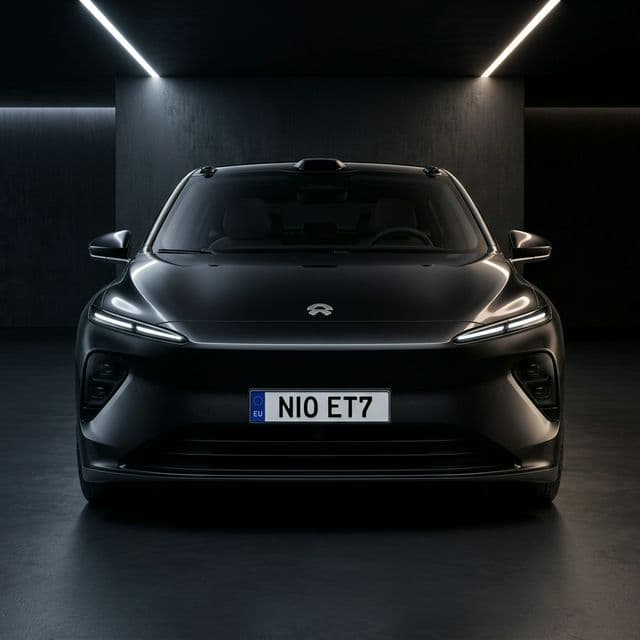
China EV Export Update W29: EU Battery Labels, Euro 7 Homologation, and Mexico 50% Tariff
Prepare for August 2026 EU EV battery physical label rules, November Euro 7 battery durability homologation, and the locked-in Mexico 50% non-FTA CBU import tariff.
Decision-level conclusion (July 15, 2026): The compliance window for China EV exports to the European Union is shifting from purely trade tariffs to physical and data-driven homologation barriers. Vehicles arriving in the EU from August 18, 2026, must feature physical battery labels and QR codes detailing capacity and lifespan under the Battery Regulation, or face port detention. Simultaneously, the July 13, 2026 amendment to EU homologation rules binds battery durability and cold-weather range data to vehicle type approvals (Euro 7). On the Latin America lane, Mexico's 50% import tariff on non-FTA Chinese CBU EVs is now a permanent structural cost, severely eroding direct-import margins and invalidating avoidance schemes.
The commercial reality for Week 29 is that high-performance Chinese EV exports can no longer clear customs on legacy documentation. Importers must bridge the gap between their factory sourcing and the exact port-of-entry compliance checks, focusing on verifiable battery data and localized tariff absorption before dispatching RoRo allocations.
For live sourcing support on navigating these barriers, send the target model, destination country, quantity band, and planned dispatch month to China Hyper EV before locking deposit terms.
Scope, Method, and Boundaries
This Week 29 brief covers importer-side controls for the European Union, United Kingdom, and Latin America (specifically Mexico). It is written for vehicle importers, performance EV distributors, dealer groups, fleet buyers, and cross-border sourcing teams purchasing premium or high-performance China-origin EVs.
Method used in this update:
- Validate against official texts: EU Battery Regulation (2023/1542), European Commission Delegated Regulations for Euro 7, and Mexico's Ministry of Economy trade tariff frameworks.
- Separate upcoming physical requirements (labels) from future digital requirements (Battery Passports).
- Translate tariff and homologation barriers into Importer Action Thresholds.
- Define evidence boundaries where local brokers or homologation agencies must sign off.
Boundary: This is a commercial dispatch and pricing decision brief, not legal advice. Final homologation, tariff classification, and customs clearance require independent verification by a localized customs broker and homologation engineer for your specific VINs.
What Changed and Why It Matters (Last 30 Days)
| Signal | Market | Confirmed date context | Why it matters to importers | Immediate control |
|---|---|---|---|---|
| Battery Label & QR Mandate | EU / EEA | August 18, 2026 | Physical vehicles without compliant battery capacity and lifespan QR codes risk port seizure. | Hold EU-bound dispatch until factory provides photographic proof of compliant labels. |
| Euro 7 Homologation Update | EU | July 13, 2026 (Published) | Amends (EU) 2018/858 to make battery durability (State of Certified Energy) a type-approval gating factor. | Request Euro 7 durability data files from the OEM homologation department before Q4 production. |
| Mexico 50% Non-FTA Tariff | Mexico | Ongoing 2026 | Destroys CBU margin for direct China imports; avoidance via USMCA loopholes faces heavy audit risk. | Reprice all MX-bound quotes with 50% duty factored in; allocate tariff burden in PI. |
EU Battery Label & QR Code Mandate (Aug 18, 2026)
The EU Battery Regulation (2023/1542) sets a hard deadline for the physical labeling of EV batteries. Starting August 18, 2026, all electric vehicle batteries placed on the EU market must carry a visible, legible, and indelible label containing specific data, accompanied by a QR code linking to the battery's capacity, performance, and durability parameters.
This is a physical port-of-entry and registration risk. Customs authorities and market surveillance bodies will look for these labels. High-performance EVs shipped from China without this physical label cannot legally clear into free circulation.
Who Should Act Now (Importer Checklist):
- Sourcing Teams: Demand a physical verification process (e.g., pre-shipment photos) for the battery label on the actual VINs being shipped.
- Compliance Managers: Verify that the QR code URL resolves to the correct manufacturer database required by EU authorities.
- Logistics: Do not load EU-bound vehicles onto RoRo vessels if the label compliance is unconfirmed.
Euro 7 Homologation Shift (July 13, 2026)
On July 13, 2026, the European Commission published delegated regulations amending the framework of (EU) 2018/858. The critical shift for EV importers is the formal integration of Euro 7 requirements into vehicle type approval—specifically concerning battery durability (State of Certified Energy and Range) and cold-weather performance.
Previously, homologation focused heavily on safety and electromagnetic compatibility (EMC). Now, the battery's degradation curve and its onboard diagnostic (OBD) reporting of State of Health (SoH) are gating factors for issuing a Certificate of Conformity (CoC). Vehicles lacking certified engineering data for these Euro 7 parameters will lose their homologation validity as implementation dates roll out (starting late 2026).
Buyer Action Checklist:
- Do not accept generic "EU Homologated" claims from parallel exporters for Q4 2026 deliveries.
- Demand the specific Euro 7 test reports covering battery durability.
- Confirm if the vehicle's OTA (Over-The-Air) update capability complies with the new cybersecurity amendments tied to the battery management system.
Mexico 50% Tariff Wall
For Latin America dispatch lanes, the structural reality of the Mexican market has crystallized. The 50% import tariff on fully assembled (CBU) electric vehicles originating from countries without a Free Trade Agreement (like China) is strictly enforced.
Importers hoping to use Mexico as a staging ground or relying on minor assembly loopholes to circumvent the tariff are facing severe customs audits. The USMCA origin rules strictly prevent transshipment avoidance for North American bound vehicles, and local Mexican distribution now requires absorbing this 50% hit into the retail margin.
The first formal joint review of the USMCA began on July 1, 2026. This has triggered intensified cross-border customs verification. Importers must maintain rigorous Regional Value Content (RVC) documentation; minor local modifications (like changing wheels or software) do not meet the transformation threshold to escape the tariff.
Mexico vs EU/UK Import Tariff & Compliance Exposure
| Metric / Requirement | Mexico (Direct China CBU) | European Union (Direct China CBU) | United Kingdom (Direct China CBU) |
|---|---|---|---|
| Base Import Tariff | 50% | 10% | 10% |
| Countervailing / Anti-Subsidy | N/A | Variable (up to ~35.3% pending OEM) | None currently implemented |
| Battery Labeling Focus | Standard NOM compliance | August 2026 QR Code & Capacity Label | Diverging from EU; standard safety labels |
| Homologation Standard | NOM (Often accepts US FMVSS / UN ECE) | Whole Vehicle Type Approval (WVTA) / Euro 7 | GB IVA / National Small Series (NSSTA) |
| Importer Risk Focus | Margin destruction via 50% tariff absorption | Port seizure for missing labels / retroactive duties | Supply chain origin proof / customs delays |
Regional Dispatch Controls
To protect capital and avoid stranded inventory, implement the following checks before releasing payment milestone 2 (pre-shipment):
| Destination lane | Dispatch release question | Fail response |
|---|---|---|
| European Union | Does the VIN have a physically verified EU Battery Regulation QR code label installed at the factory? | Hold dispatch until photographic proof is provided. |
| United Kingdom | Is the homologation pack based on UK NSSTA/IVA or a legacy EU WVTA? | Do not ship until the UK-specific homologation route is cleared. |
| Mexico / LatAm | Does the Proforma Invoice (PI) model 100% of the 50% tariff, and who bears the cost if customs challenges the valuation? | Reprice the deal; do not proceed on zero-tariff assumptions. |
Risks and Limits
It is critical to operate within the following evidence gaps and boundaries:
- Do not confuse Labels with Passports: The August 18, 2026 requirement is for a physical label and QR code linking to static capacity and lifespan data. Do not confuse this with the full Digital Battery Passport (DBP) required by February 18, 2027, which tracks the individual battery's dynamic lifecycle and supply chain.
- Mexico transshipment risks (Evidence Gap): Do not assume a vehicle paying the 50% tariff in Mexico can be freely exported to the USA under USMCA. The vehicle's core components maintain their Chinese origin. With the USMCA Joint Review initiated in July 2026, U.S. Customs and Border Protection (CBP) has explicitly closed "minor assembly" loopholes. This is a severe compliance boundary: only fully homologated localized manufacturing meeting rigorous Regional Value Content (RVC) can clear this hurdle.
- Euro 7 application dates: While the framework amendment was published in July 2026, enforcement dates vary by vehicle class (M1 vs N1) and new vs. existing types. You must consult a homologation engineer for your specific chassis.
FAQ
1. If our vehicles arrive in Antwerp on August 15, do they need the battery QR label?
Vehicles placed on the market before August 18, 2026, technically fall under the grace period. However, given customs processing times and potential delays, any vessel arriving in August should have compliant vehicles to avoid stranded inventory.
2. Can the EU Battery QR label be applied at the destination port?
Technically, it is the manufacturer's responsibility to affix the label before placing it on the market. While some port processors offer modification services, doing so risks customs holding the vehicles before they reach the processing facility. It is vastly safer to mandate factory application.
3. Will the 50% Mexican tariff apply to SKD (Semi-Knocked Down) imports?
The 50% tariff applies to CBU. SKD/CKD kits may qualify for different tariff lines under specific manufacturing promotion programs (like PROSEC), but this requires a registered Mexican assembly facility and strict local value-add compliance. It is not a loophole for trading companies.
4. How does the Euro 7 battery durability rule affect grey market parallel exports?
It severely restricts them. Grey market exporters buying vehicles from Chinese domestic dealers cannot easily generate the required Euro 7 durability compliance data, as the domestic Chinese factory software and BMS are not calibrated or certified for EU OBD reporting standards.
Sources
| Source | Organization | Date context | What it supports |
|---|---|---|---|
| EU Battery Regulation (2023/1542) | European Union | In force (Checked July 2026) | Confirms August 18, 2026 deadline for physical battery labels and QR codes. |
| Delegated Regulation amending (EU) 2018/858 | European Commission | Published July 13, 2026 | Confirms the integration of Euro 7 battery durability and emissions requirements into the type approval framework. |
| Secretaría de Economía | Mexico Ministry of Economy | Checked July 2026 | Confirms the enforcement of the 50% import tariff on non-FTA EVs. |
| USMCA Joint Review & Origin Rules | U.S. Trade Representative (USTR) | July 2026 Context | Basis for the heightened audit risks on EV transshipment and RVC enforcement. |
OPSX_NEWS_DEEPEN_STATUS: SUCCESS OPSX_NEWS_DEEPEN_FILE: content/blog/china-hyper-ev-export-update-2026-w29.mdx OPSX_NEWS_DEEPEN_REASON: Added Mexico USMCA joint review context, audit risk matrix SVG, transshipment boundary clarification, and expanded sources.